Meet Hon. Alex Mascot, The Lawmaker Who Exposed The Missing ₦1.15 Trillion Capital Funds
- By Metropolix ~
- March 2, 2026 --
- 0 Comment

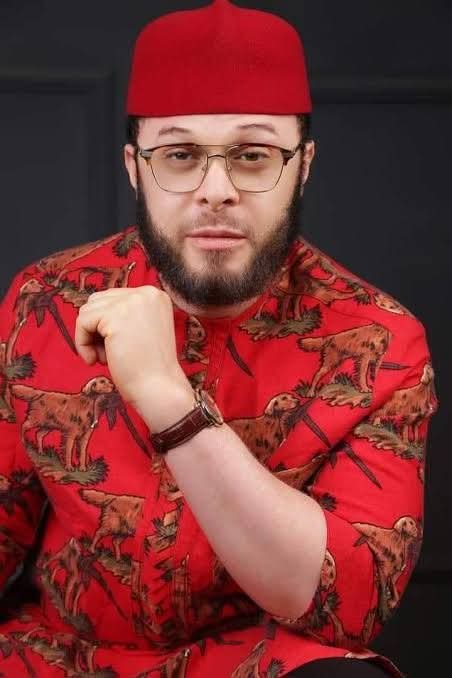
— Hon. Alex Mascot Ikwechegh
By Adeola Idris
The scene at the House of Representatives Appropriation Committee hearing on Wednesday, February 25th was tense, dramatic, and defined by one man’s relentless pursuit of answers.
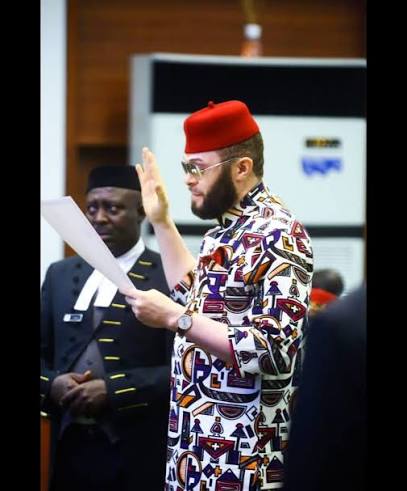
Hon. Alex Mascot Ikwechegh, member representing Aba North/Aba South Federal Constituency and a key member of the Aids and Loans Committee, took centre stage as he confronted the Minister of Finance, Wale Edun, over the unexplained disappearance of capital project funds—despite trillions of naira in loans and record-breaking revenues.
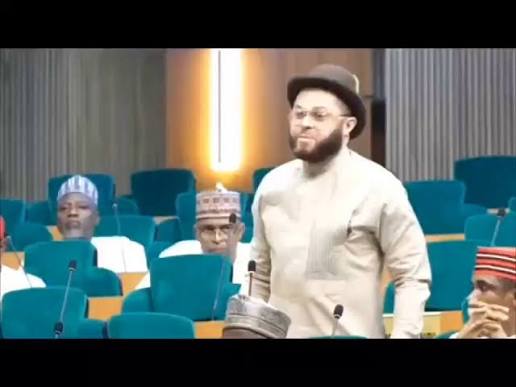
What began as a routine budget defence quickly escalated into a high-stakes interrogation when Hon. Ikwechegh revealed a disturbing pattern:
. ₦1.15 trillion had been raised and specifically approved by the National Assembly to fund 30% of the 2025 capital budget
· Multiple loans had been secured, including:
· $1.2 billion for digital infrastructure
· $500 million for economic stimulus
· $500 million for MSMEs (approved December 2025)
· $500 million from the African Development Bank (November 2025) for economic governance and energy transition
· A recent executive request for $21 million, 15 billion Yen, and 4 billion Euros
Yet, despite this avalanche of borrowed money and strong revenue performance by agencies like FIRS, Customs, and others, capital projects across Nigeria remain at zero disbursement.
Hon. Ikwechegh, visibly frustrated, walked the Minister through the figures with surgical precision:
“With all these funds put together… I want you to enlighten us on why the 2024 budget is yet to be fully implemented, and why the 2025 budget has only been funded 34%—most of which is recurrent expenditure.”
He then delivered the question that silenced the room:
“I want you to enlighten us on why our capital projects still remain at zero. Talking about our country. This is our country. Are you not in Nigeria? Why the capital of the Nigerian government remains at zero in 2026?”
When pressed, Minister Wale Edun shifted responsibility to the Minister of State for Finance, Doris Uzoka-Anite, claiming she handled disbursements.
This deflection infuriated committee members. If the substantive Minister of Finance cannot account for ₦1.15 trillion approved for capital projects, who can?
The session became rowdy. Lawmakers shouted, demanding answers. Some called for the ministers to resign. The committee had no choice but to adjourn the hearing to Thursday, February 26th, summoning the Minister of State to provide the clarity the nation deserves.
Speaking after the heated exchange, Hon. Ikwechegh framed the issue in stark legal terms:
“If this infraction is identified, it means there has been misappropriation of funds—which is a crime.”
His point is simple but devastating: funds were approved by the National Assembly. Funds were borrowed from international lenders. Funds were generated by revenue agencies. Yet those funds never reached the capital projects they were intended for.
Where did the money go?
For ordinary Nigerians, this is not abstract parliamentary procedure. It means:
· Roads in constituencies like Hon. Ikwechegh’s Aba remain unmotorable
· Hospitals lack equipment despite health sector allocations
· Schools remain unbuilt while contractors go unpaid
· Jobs are not created because infrastructure projects are stalled
When capital projects are at zero, development stops. When development stops, Nigerians suffer.
Wednesday’s performance cements Hon. Alex Mascot Ikwechegh’s reputation as one of the House’s most dogged advocates for transparency. Armed with facts, fortified by his position on the Aids and Loans Committee, and unafraid to confront powerful ministers, he demonstrated what legislative oversight should look like.
His constituents in Aba North/Aba South—a commercial hub crippled by infrastructural neglect—have found a champion willing to ask the hard questions at the highest level.
All eyes were on Thursday’s resumed hearing, where Minister of State for Finance, Doris Uzoka-Anite, was summoned to account for the missing ₦1.15 trillion.
At that hearing, Uzoka-Anite confirmed that ₦1.15 trillion was indeed approved for capital projects. However, she revealed that disbursement protocols require multiple sign-offs, and that certain “pre-disbursement conditions” had not been met by some ministries.
She argued that while the funds exist, they cannot be released until:
· Project documentation is complete
· Procurement processes are finalized
· Ministries submit required feasibility reports
But committee members, armed with the Health Minister’s earlier testimony that he received only ₦38 million of his ₦286 billion allocation, demanded to know: if protocols were the issue, why were some ministries given the runaround while others weren’t?
In what observers described as Thursday’s defining moment, Hon. Ikwechegh rose again and asked:
“Mr. Chairman, can the minister tell this committee which specific ministry met all conditions and still did not receive funding? If none existed, why was ₦1.15 trillion approved when the government knew conditions weren’t met?”
The minister could not provide a single example.
The questions Hon. Ikwechegh has raised will not go away:
· If capital funds were approved, where are they?
· If they were misappropriated, who is responsible?
· If this is a crime, who will be held accountable?
Hon. Alex Mascot Ikwechegh has done what effective legislators do: followed the money, asked the tough questions, and refused to accept bureaucratic evasions.
Whether the Minister of State provided answers on Thursday—or whether Nigerians are left with more questions—one thing is clear: Hon. Ikwechegh has placed a spotlight on what may be one of the most significant financial infractions in recent National Assembly history.
And as he reminded the committee, if funds were approved but never reached their destination, that is not poor administration.
All You Need To Know About Hon. Alex Mascot Ikwechegh:
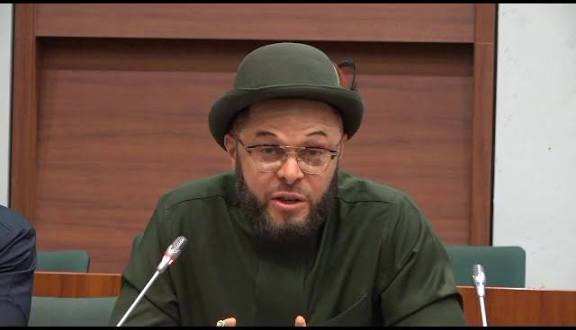
Alex Ikwechegh Mascot is known for his wealth, political involvement, and controversial public incidents
Professions: Businessman, Nigerian Politician, philanthropist, Politician
Elected /Appointed: House of Representatives
Alex Ifeanyi Mascot Ikwechegh is a Nigerian politician, businessman, and former Local Government Chairman of Aba North in Abia State, Nigeria. Known for his contributions to both business and political sectors, Ikwechegh has played a prominent role in Abia State’s local governance, focusing on developmental projects in Aba North during his tenure. His influence extends beyond local politics, as he remains active in business.
Early Life and Family Background
Alex Ikwechegh was born and raised in Nigeria, where he built a reputation for his influential status. Born into a prominent family in Abia State, Nigeria, Ikwechegh quickly built a reputation for his entrepreneurial acumen, founding and managing several companies, particularly in logistics and finance. His business success paved the way for his entry into politics, where he has attempted to leverage his influence to drive change within his community.
Career and Politics
Ikwechegh’s political journey began with his election as the Chairman of Aba North Local Government Area under the banner of the People’s Democratic Party (PDP). In this role, he focused on grassroots initiatives, supporting local infrastructure projects, youth empowerment, and community development programs. His tenure saw the initiation of various local projects, which helped boost his popularity among his constituents. However, his assertive leadership style often drew criticism from political opponents and community members alike, leading to a complex legacy marked by both accomplishments and controversies.
After his term as Chairman, Ikwechegh continued to nurture his political career, often shifting alliances in pursuit of higher office. He later aligned with the All Progressives Congress (APC), hoping to expand his influence beyond Abia State’s borders. This switch in allegiance highlighted his pragmatic approach to politics, as he sought affiliations that could offer him greater access to resources and a broader network. Despite multiple attempts to secure higher political office, including a bid for a seat in the National Assembly, he has yet to succeed, often falling short due to shifting party dynamics and internal disputes.
Philanthropy and Social Impact
Known for his philanthropic activities, Ikwechegh has contributed significantly to community development projects in Abia State. His charitable contributions include donations to educational institutions, support for healthcare facilities, and sponsorship of youth empowerment initiatives. His philanthropic efforts have won him a considerable following, particularly among the youth and lower-income communities in Aba and across Abia State. Ikwechegh has also made donations to orphanages, sponsored community festivals, and financed scholarships, further enhancing his image as a benefactor in the region.
Scandals and Controversies
Ikwechegh’s political career has not been without controversy. His assertive style and high-profile public persona have sometimes led to public disputes and allegations of power abuse. One notable incident involved his reported altercation with a ride-hailing service driver, which sparked discussions about accountability and power dynamics among Nigerian elites. This incident received widespread media attention, and Ikwechegh eventually issued a public apology, acknowledging his behavior.
His career has also faced challenges related to shifting party allegiances, which have led some to question his commitment to a clear political ideology. Critics argue that his frequent party-switching suggests opportunism rather than a genuine commitment to public service, though his supporters see it as strategic maneuvering necessary to navigate Nigeria’s complex political landscape.
One of the more prominent incidents involved Ikwechegh reportedly confronting a Bolt driver over a service disagreement. Alex recently faced a wave of criticism after an altercation with a Bolt driver went viral. During the incident, Ikwechegh reportedly slapped the driver multiple times after the driver asked him to retrieve an item from the car. Ikwechegh allegedly responded with a threat, stating, “Do you know who I am? I’ll make you disappear in the whole of Nigeria, and nothing will happen.” The video and details of this confrontation quickly circulated, drawing public condemnation and sparking discussions about privilege, power abuse, and accountability in Nigerian society.
Following the outcry, Ikwechegh issued a public apology, acknowledging the incident and expressing regret for his actions. His statement aimed to ease tensions and respond to calls for accountability; however, opinions remain divided. Some view his apology as a step towards humility and responsibility, while others feel that it fails to address the deeper issues surrounding the misuse of authority. This incident has continued to fuel discussions on social media and in public discourse, highlighting ongoing concerns around power dynamics in Nigeria and the treatment of service workers by individuals in positions of influence.
Personality and Public Perception
Alex Ikwechegh Mascot’s public persona is notably polarizing; while some admire his confidence and success, others critique his assertive approach to authority and interactions with others. He is married to Mrs. Adaobi Obioha Ikwechegh, who is often seen as a calm and supportive presence alongside him. Together, they form a high-profile couple, with Adaobi balancing his public image by bringing warmth and steadiness to their shared reputation.
Business Ventures and Influence
In addition to his political pursuits, Ikwechegh has maintained a strong presence in the business world. He has founded and managed companies in various sectors, including logistics, finance, and construction. His business ventures have not only contributed to his personal wealth but also created employment opportunities in his community. His experience as a businessman has informed his political strategies, as he often approaches political issues from a business-oriented perspective, prioritizing efficiency and results-driven outcomes.
Ikwechegh’s ability to leverage his business network has proven advantageous in his political journey. He is known to maintain connections with influential figures across Nigeria’s business and political spheres, which has helped him secure support and resources for his campaigns and community projects.
Legacy and Public Perception
Alex Ikwechegh’s career remains a subject of debate. While his supporters view him as a committed philanthropist and advocate for social change, his detractors cite controversies and his high-profile incidents as a challenge to his reputation. His philanthropic gestures, such as donations to community projects and social development programs, have earned him respect, particularly among his constituents in Abia State. His political ambitions and achievements reveal a mix of business acumen, strategic networking, and a desire to make a lasting impact on his community, even if that journey has been complex and, at times, divisive.
Whether Ikwechegh can ultimately transcend the controversies and achieve his political ambitions remains to be seen. However, his career to date underscores his resilience and his determination to shape both the business and political landscapes of Nigeria.
RELATED ARTICLES