Amid EFCC N4.3bn Forex Fraud Charges: UBA Rated Nigerian Bank With High Volume Of Unresolved Customer Complaints
- By Metropolix ~
- March 11, 2026 --
- 0 Comment


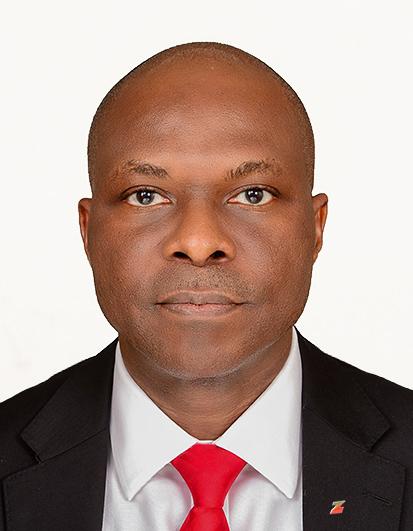
— Oliver Alawuba, GMD/CEO of UBA
By Muyiwa Akinola
With over 3.2 million complaints regarding failed transactions in 2024, representing a 66.3% increase from 2023. While the bank resolved 75% of these, a significant volume, exceeding 1.1 million, remained unresolved as of late 2025 United Bank for Africa (UBA) has been rated with the highest volume of customer complaints.
This became known following
The Economic and Financial Crimes Commission (EFCC) ₦4.3 billion alleged foreign exchange fraud case filled against United Bank for Africa (UBA) Plc and four other defendants at the Ikeja Special Offences Court, Lagos.
The other defendants named in the charge are Muyiwa Akinyemi, Amangbo Stephen, Gesos Global Service Limited, and Fedat Global Limited.
When the matter came up in January, none of the defendants was present in court, and no legal representation appeared on their behalf. Presiding judge, Justice Rahman Oshodi, consequently adjourned the case until April 21, 2026, for the arraignment of the accused persons.

— UBA Headquarters, Marina Lagos
EFCC counsel, Temitope Banjo, who announced his appearance, expressed surprise at the absence of the defendants, informing the court that all parties had been duly served with the charge and other court processes. He further disclosed that the second and third defendants were aware of the proceedings but were currently on the run.
“My Lord, the second and third defendants are on the run. We are still making efforts and gathering intelligence on their whereabouts,” the prosecutor told the court, stressing that their absence was not due to lack of notice.
Mr Banjo subsequently applied for an adjournment to enable the commission to file the necessary applications to formally establish proof of service on the defendants. Justice Oshodi granted the application and fixed April 21 for arraignment.
According to the charge sheet, the defendants are facing a four-count charge bordering on conspiracy, stealing, money laundering, and retention of proceeds of crime. The alleged offences were said to have been committed between September 14, 2022, and March 20, 2023, in Lagos.
In one of the counts, the EFCC alleged that the defendants fraudulently converted and stole the sum of ₦4.3 billion belonging to Energy Shield Petrochemical Limited. The anti-graft agency also accused the defendants of conspiring to sell foreign exchange above the rates stipulated by the Central Bank of Nigeria (CBN) and subsequently retaining and laundering the proceeds of the alleged illegal transactions.
The commission further alleged that UBA retained the said sum in its account number NGN0991931102, an act it said contravenes Section 17 of the EFCC (Establishment, etc.) Act, 2004.
The alleged offences, according to the prosecution, also violate Sections 8 and 17(a) of the Advance Fee Fraud and Other Related Offences Act, 2006, as well as Sections 285 and 332(1) of the Criminal Law of Lagos State, 2015.
The case was adjourned for further proceedings.
However, going by opinions around town especially their customers,
UBA is ranked worst among the Nigerian banks with the highest number of failed bank transactions by volume and intensity of failed transaction complaints recorded on various social media sites in 2024.
Meanwhile, Stanbic IBTC had the best reputation for reliability in 2024.
Incidents of system outages and failed upgrades dogged these three major banks leading to persistent complaints, with thousands of customers reporting failed transfers, frozen accounts, and delayed funds reversal.
Large volumes of unresolved failed transactions have also led frustrated customers to switch to fintech platforms.
More than 60% of customer complaints in early 2024 related to failed electronic transactions, with failed transfers as a major category.
Persistent failures have eroded public trust and forced many individuals and businesses to seek alternatives with fintech providers like OPay, Moniepoint and PalmPay.
Mobile money and fintech (OPay, PalmPay) processed ₦41.5 trillion in transactions (Jan–July 2024) compared to negligible levels in 2020, reflecting a shift away from less reliable bank payment channels, according to data from Ecofin Agency.
Meanwhile, failure rates on POS rose to roughly 13–15% of all card transaction attempts by mid-2024, a significant uptick compared to pre-pandemic levels, according to the NIBSS.
“This is a worse assessment for a bank as big as UBA, so one cannot have confidence in all these so called big banks in Nigeria again,” a customer who simply identified herself as Lolade told our reporter.
The Central Bank of Nigeria (CBN) has directed banks to speed up reversals and upgrades, with the National Assembly calling for scrutiny of high complaint rates.
RELATED ARTICLES