Recapitalization: List Of 21 Banks That Have Met The New CBN Capital Rules
- By Metropolix ~
- January 15, 2026 --
- 0 Comment

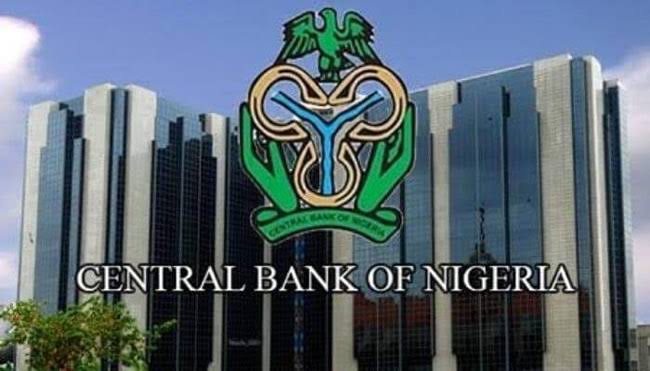
–– CBN Head office
By Muyiwa Akinola
Nigerian banks are racing to meet the new capital requirements mandated by the central bank, a policy shift that is expected to strengthen the lenders’ resilience against shocks and enable them to make meaningful contributions to the country’s growth agenda.
The recapitalisation exercise, which began in 2024, sets N500 billion for commercial banks with international authorisation, N200 billion for national banks, and N50 billion for regional banks. For non-interest banks, the thresholds are N20 billion (national) and N10 billion (regional).
The 24‑month compliance window ends on March 31, 2026, a regulation that’s triggering a wave of equity issuances, merger talks, and balance-sheet restructuring across the sector.
The recapitalisation echoes a 2004 exercise under then-CBN governor Charles Soludo, which forced banks to raise capital to N25 billion from N2 billion. That consolidation cut the number of lenders from 89 to 25 and paved the way for stronger players to emerge.
As of January 8, 21 lenders have completed the new capital raise with Access Bank, the country’s largest lender by assets, emerging as the first to scale through the hurdle.
International Banks:
Access Bank
Access Bank raised a total of N351 billion through a rights issue, making the Lagos-headquartered lender the first Nigerian bank to meet the new capital base of N500 billion. The rights issue involved 17.77 billion ordinary shares at N19.75 each. With a combined share premium and paid-up capital of N602.8 billion, the bank has exceeded the CBN requirement by N102.8 billion.
Zenith Bank
Zenith Bank has also concluded its recapitalisation exercise, raising over N350 billion through a combination of rights issues and public offers. The bank’s share capital now stands at N614 billion, surpassing the minimum capital requirement for international banks.
First HoldCo (First Bank)
First HoldCo Plc has also met the Central Bank of Nigeria’s (CBN) minimum capital requirement of N500 billion. The milestone, according to the lender, was achieved following the completion of a series of strategic capital initiatives, including a Rights Issue, a Private Placement, and the injection of proceeds from the divestment of the Group’s merchant banking subsidiary.
GTCO
Guaranty Trust Holding Company (GTCO) stands among lenders that have completed their capital requirements. Nigeria’s most valuable lender raised its capital through a multi-tranche equity program, raising over N209 billion in its first phase (late 2024/early 2025), with plans for further fundraising, including a recent private placement for N10 billion, to strengthen its banking subsidiary (GTBank) and fund group expansion. The capital injection boosts GTBank’s paid-up capital to over N504 billion, fulfilling new regulatory mandates.
UBA
United Bank for Africa raised N178.3 billion through a rights issue, pushing its capital base above the N500 billion minimum set by the Central Bank of Nigeria (CBN) for lenders with an international license.
The capital raise, which closed in September 2025, follows a N239 billion injection completed in November 2024 that had lifted the bank’s capital to N355.2 billion. Combined, the transactions position UBA above the CBN’s recapitalisation threshold ahead of the March 2026 deadline, pending formal regulatory confirmation.
Fidelity Bank
Fidelity Bank has equally joined the league of lenders that have scaled through the new capital requirements ahead of the deadline. The bank’s eligible capital now stands at N564.5 billion from N305.5 billion – a rise that’s done through a private placement carried out under a mandate granted by shareholders at an extraordinary general meeting on February 6, 2025, authorising the bank to issue up to 20 billion ordinary shares.
The fundraising caps an aggressive capital-raising drive by Fidelity over the past two years. In 2024, the lender raised N175.85 billion through a public offer and rights issue, which brought its eligible capital to N305.5 billion. That left a shortfall of about N194.5 billion relative to the new minimum capital threshold.
National Banks:
Wema Bank
Wema Bank also announced the completion of its recapitalisation by raising N150 billion through a rights issue of 14.29 billion shares at N10.45 per share, concluded on May 21, 2025. The bank is awaiting final verification from the CBN, with a N50 billion portion of the offer currently under review by the Securities and Exchange Commission (SEC), according to posts on social media.
Citibank Nigeria
Citibank Nigeria Limited (Citi) has also announced that it had successfully met the Central Bank of Nigeria’s (CBN) new minimum capital requirement of N200 billion for national commercial banks. The lender did not disclose how the capital was raised.
Standard Chartered Bank
Standard Chartered Bank Nigeria also said in November last year that it had met the N200 billilon capital threshold through support from its UK-based parent.
Ecobank Nigeria
Ecobank is also among the lenders that have crossed the recapitalisation hurdle, raising the minimum paid-up capital for a national bank.
Globus Bank
Globus Bank completed its capital requirement by raising N52.9 billion in 2024 to lift its capital to N98.6 billion, and followed in 2025 with a further N102 billion through rights issues and private placements. The raise, subscribed entirely by existing shareholders, took its capital above N200 billion.
Stanbic IBTC
Stanbic IBTC has equally scaled through the capital threshold set for national banks, as the lender raised N200 billion through a rights issue and a direct capital injection by its parent company.
PremiumTrust Bank
PremiumTrust Bank has met the N200 billion minimum capital requirement for National Commercial Banks ahead of the March 2026 deadline set by the Central Bank of Nigeria (CBN), becoming only the third national bank to do so.
The upstart lender, just three years old, exceeded the new capital requirement after wrapping up a rights issue and private placement with CBN sign-off in August, placing the bank among the early complaints to the new rule.
Providus Bank
Providus Bank also completed its recapitalisation, an exercise done through a sealed strategic merger with Unity Bank. This makes Providus–Unity the first approved merger under the CBN’s recapitalisation programme announced earlier in 2024.
Other banks that have met the new capital requirement include merchant banks such as FSDH Merchant Bank, Greenwich Merchant Bank, Nova Bank, and Rand Merchant Bank.
Non-interest banks are not left behind, as Jaiz Bank, Lotus Bank, and TAJBank have beefed up their capital ahead of the CBN deadline.
RELATED ARTICLES